

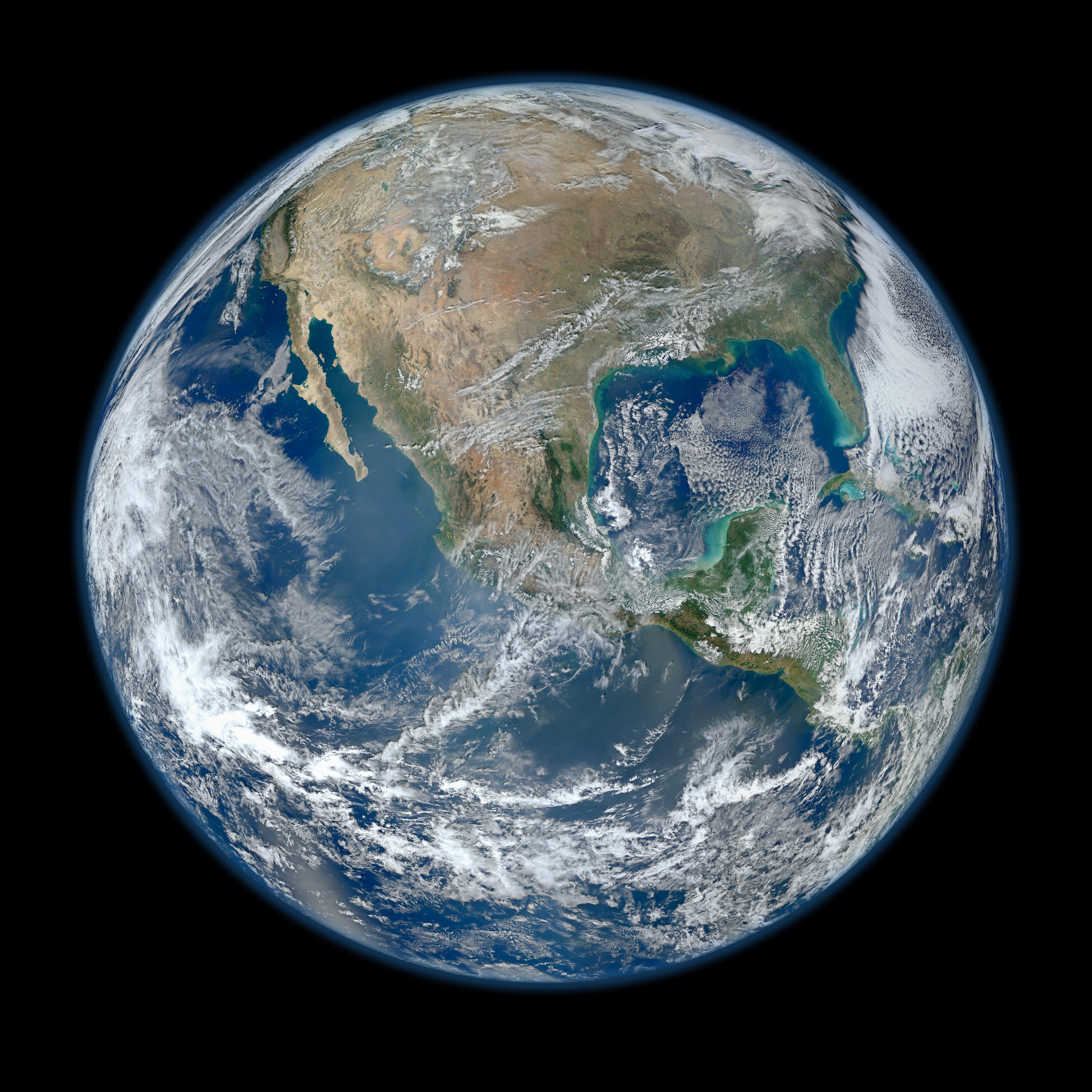
Every day, we breathe, walk, work, and consume on the big blue marble we call Earth. We understand our planet as a floating, inanimate rock in space, simply a habitat to provide for us, but it may be as living as you and me.

For millennia, Indigenous Peoples have considered and treated the Earth as a living entity, possessing spirit and consciousness. Contrary to Western capitalistic cultures, they believed humans to be equal relatives to the elements of the Earth, rather than dominators, taking care of and tuning into natural landforms, from the murmuring rivers and howling mountains to the whispering trees and cracking lightning. Every element is sentient and kindred.
Similar to humans and other living creatures, the Earth has a complex system comparable to a functioning body: breathing forests parallel ventilating lungs, circulating ocean currents and wind movements mirror vasculature, life is decomposed and recycled by microorganisms like digestion and our gut microbiomes, winter and volcanic dormancy echo sleep, regrowth and recovery reflect immune responses, fungi communicate along thin roots via electrical signals like action potentials, and even water, rock, and trees hold memory and age akin to the brain, wrinkles, and scars. But does scientific research support the idea of Earth as a single, self-regulating, sensing, and conscious living organism?
“Indigenous people are very scientific – it’s just that our science includes the heart.” – Jonathan Ferrier, Indigenous ethnobotanist
The Gaia Hypothesis, named after the Greek goddess of Earth, was proposed by chemist and inventor James Lovelock and biologist Lynn Margulis in the 1970s. It states the Earth behaves as a single, synergistic entity, self-regulating through biological negative feedback loops to keep the conditions on the planet habitable. All living and non-living parts of the planet act as cells to engine the cumulative planetary body it forms. Scientifically, there is no universally accepted definition of what makes life living. However, there are seven qualities that classify something as a living thing: order and structure, reproduction, growth and development, energy use, homeostasis, response to the environment, and adaptation. How many does Earth check off?
Homeostasis, Response to the Environment, and Adaptation
The biosphere affects the stability of many features on Earth: global temperature, seawater salinity, and atmospheric oxygen levels. James Lovelock emphasised if “humidity or salinity or acidity or any of one of a number of other variables had strayed outside a narrow range of values for any length of time, life would have been annihilated”. Even with external conditions changing, such as the luminosity of the sun increasing by 5% since four billion years ago, the Earth has responded to external stimuli such as solar radiation and the composition of the atmosphere, and adapted accordingly to protect its life.

James Lovelock and Andrew Watson proposed a mathematical model, Daisyworld, simplifying Earth’s feedback loops: competing populations of daisies lead to a balance that maintain optimum habitable temperatures. When solar luminosity is low, black daisies absorb light and warm the planet, whereas when luminosity is high, white daisies reflect light and cool the planet. These feedback loops occur throughout nature. Fungal networks share water and nutrients with trees, allowing hundreds of miles of forests to recognise and respond to change, and even in the oceans, phytoplankton produce dimethyl sulfide as a negative feedback loop to stabilise atmospheric temperatures. Homeostasis has been maintained through evolution over billions of years and adaptations to planetary changes from continental drift to mass extinction events.
Energy use
Many of these changes are due to the vast amount of energy usage to coordinate processes, networks, and systems. The Earth essentially has its own metabolism, radiating its own geothermal core in infrared waves and absorbing external solar energy in light and ultraviolet waves; these two energy sources, being received from the Sun and lost from Earth into space, balance to maintain a stable global temperature and climate. Solar energy is not dispersed across the Earth equally, which drives the water cycle and convection currents in the air and oceans. The core’s geothermal energy fuels tectonic movements, forming mountains and volcanic activity.
Order and Structure, Reproduction, Growth and Development
What Earth does not tick off is adhering to cellular order and structure, as it is not composed of cells. Earth also cannot reproduce offspring or replicate itself, or in a biological sense, grow and develop. However, the trillions of lifeforms on the planet act as cells, reproducing, growing, and developing in ways that maintain the biosphere. The evolution of the planet and its lifeforms are not separate – rather, they are one single process. Lynn Margulis found over 200 mostly dormant microorganisms ready to conduct their function under the right conditions and emitted a specific gas based on external conditions. Similarly, atmospheric scientist Pat Zimmerman found intestinal bacteria in termites act as a source for half of the methane in the Earth’s atmosphere. Our bodies contain trillions of microorganisms – on our skin, in our gut, in our blood – and without them, we could not survive. The same goes for planet Earth, holding trillions of lifeforms to keep it functioning.
Consciousness
Ultimately, Earth does not definitively check all the qualities to be a living thing. Although our Earth can be considered a self-regulating singular entity, if we view it as a body covered in life and inorganic matter that supports its survival, just like humans. Our final question to determine the sentience of the Earth remains: is she conscious? Lovelock stated the Gaia hypothesis is evidence of systematic intelligence but clarifies the feedback loops do not mean consciousness. The Earth lacks a nervous system or sensory organs, so cannot be considered conscious without a centralised information-processing system, but astrobiologists have argued a planet can be considered intelligent if it demonstrates cognition, defined by the capacity to know something about what’s happening and act on that knowledge. Earth is not self-aware, with the ability to make conscious decisions, but can anticipate potential issues and solve them with feedback loops – the definition of cognition.
The Verdict
Although not scientifically recognised as a living being, the Earth speaks and senses in the same way living organisms do to survive. Many argue science and spirituality are distinct from one another – even opposite, conflicting ideologies. However, the two could intertwine in harmony, just as the Indigenous Peoples have done for millennia. It would not be the first time Indigenous populations across the globe have understood and discovered aspects of the natural world long before the West. Overall, viewing our planet as more than a sphere of layered rock, water and vegetation, but instead as a sentient being, provides heart and compassion – and that’s necessary for understanding and protecting her.

Human civilisations have developed advanced and impressive communication, transport, energy, and food production systems but consequently caused a massive negative impact on the planet, breaching seven planetary boundaries according to the Planetary Health Check 2026; major ‘red zone’ concerns are in climate change, biosphere integrity, biogeochemical flows, and the introduction of novel entities such as synthetic chemicals and microplastics, with increasing risk of changes to land systems, freshwater, and ocean acidification. We are close to the tipping point of irreversible harm to our planet. Our technologies are, unlike the rest of the natural networks and systems on Earth, independent and selfish, aiming to improve human life at the expense of Earth’s. Instead, viewing Earth as an intelligent sentient entity provides an avenue for human technology to co-evolve with the natural planet – the technosphere and biosphere working hand in hand to develop solutions such as automated food waste upcycling and converting methane into useful green products. This could lead to a system that helps repair, improve, and maintain the Earth for the future generations to come.



Leave a Reply